
• Skip to primary navigation
  • Skip to main content
  • Skip to primary sidebar

Southern Maryland Kitchen, Bath, Floors & Design

Southern Maryland Kitchen, Bath, Floors, & Design logoSouthern Maryland Kitchen, Bath, Floors, & Design base logo

California, MD Home Remodeling

(301) 241-0702
23415 Three Notch Road #2025, California, MD 20619
Reqest Consultation
  • Services
    • Bathroom Remodeling
    • Basement Remodeling
    • Custom Closets & Cabinetry
    • Design Retainer
    • Kitchen Remodeling
    • Flooring Services
    • Additions
  • Products
    • Bathroom Fixtures
    • Cabinets
    • Carpet
    • Carpet Tile
    • Countertops
    • Glass Tile
    • Hardwood
    • Heated Flooring
    • Laminate
    • Luxury Vinyl
    • Natural Stone
    • Tile
    • Vinyl
    • Waterproof Flooring
  • Financing
    • Kitchen Remodel Financing
    • Bathroom Remodel Financing
  • About Us
    • Blog
    • Careers
    • Contact
    • Portfolio
    • Reviews
  • Request Consultation

Kitchen

January 13, 2025 by Southern Maryland Kitchen Bath Floors & Design

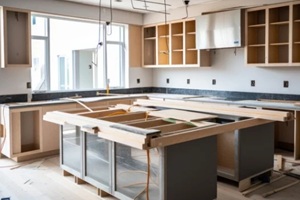
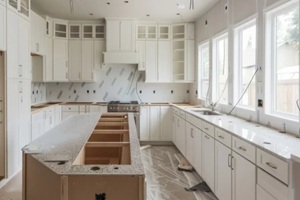
ongoing kitchen remodeling project

Kitchen remodels can be intricate processes that require careful consideration. Relying on a professional for the remodel, allows homeowners to benefit from expertise, especially in identifying red flags and initiating repairs before proceeding with the project. Structural integrity is non-negotiable for any remodeling project, not only to maintain safety and regulatory compliance but also to prevent costly mistakes.

To help you avoid common structural constraints in kitchen remodeling, consider the following factors before beginning your project, including frame assessments, building code compliance, permit approval, and more.

Kitchen Remodel vs Kitchen Renovation

A kitchen renovation is usually smaller in scale when compared to a kitchen remodel. Renovations typically make minor upgrades to the kitchen’s aesthetics without changing its structure. Popular renovations include getting new cabinet finishes such as knobs and pulls, or replacing external hinges for internal hinges. Upgrading one or more appliances, modernizing lighting fixtures, or repainting the walls are other common renovations.

Conversely, a kitchen remodel alters the structure of the room with a new layout or addition, or blending two rooms to create more space. This distinction is important for homeowners to understand because while a renovation is often a good match for a DIY project, a remodel usually requires the experience of a professional interior designer to maintain structural integrity throughout each step of the process.

Steps to Assess Structural Constraints

These steps can help you prioritize safety and compliance in your kitchen remodeling project. While color, millwork, and other details often preoccupy DIY home designers, professional home remodelers know that structural foundation should be the priority.

1. Assess Foundation

The first step is to look at the room’s structural foundation and ensure it can withstand the remodeling process. The walls, beams, and supports hold up the weight of the room while the floor joists support its load. These structures should be reviewed for safety compliance and condition before proceeding.

2. Assess Capacity

newly remodeled kitchen

As part of the foundation assessment, make sure the frame and joists are capable of bearing the load of any add-ons you might be planning. It’s not enough to assess the foundation’s current condition if new cabinets, appliances, kitchen islands, counters, and more will be added during the remodeling process.

Always plan ahead to incorporate the new predicted weight capacity of the room when testing its structures.

3. Inspect for Damage

While checking the capacity and integrity of the room, inspect for damage to the foundational supports, beams, and floor joists. Any signs of damage such as wood dust or cracks should be a red flag to inspect the foundation further. The root cause of any wood rot, infestations, or sagging should be addressed before proceeding with the remodel.

Benefits of Professional Structural Assessments

A professional structural assessment offloads a complex regulatory task from the homeowner to skilled kitchen remodelers. When hiring a professional remodel team, they should have experience conducting inspections, making load-bearing calculations, and more. Consider how a professional remodeling team can help complete your project with these key benefits:

  1. Knowledge and Experience: Professional remodelers understand the permit process in the local area as well as building code and regulatory requirements. They have experience conducting damage assessments and are more likely to notice key details missed in a homeowner’s DIY assessment.
  2. Safety Assurance: Professional remodelers ensure stability in their new constructions while assessing the condition of existing ones. During their assessment, they will check for damage and code violations to ensure your foundation is compliant and safe.
  3. Financial Savings: Professional assessments help homeowners future-proof their homes against damage and code changes by modernizing the structure during the remodeling process.
  4. Regulatory Compliance: Professional remodelers understand the regulations in your area, keeping your project compliant. If you need permits for the remodel, they typically apply for these.

Where structural integrity is concerned, early detection is key for a smooth remodel. This will help in maintaining compliance with building codes and permits, and avoid costly setbacks. While homeowners can research local regulations, structural issues, and code violations independently, a professional kitchen remodeler is better positioned to help you realize your ideal kitchen without sacrificing safety in the process.

Start Your Maryland Custom Kitchen Remodel with Professional Guidance

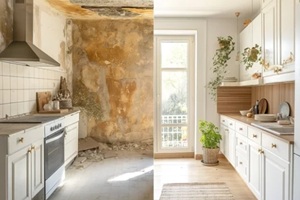
kitchen remodeling before and after

Homeowners often confront unforeseen challenges during kitchen remodels. Structural integrity is a major concern since inaccurate damage assessments can lead to code violations, costly equipment failures, and unsafe additions.

To keep themselves and their families safe, homeowners turn to experienced remodelers to guarantee safety and maintain regulatory compliance throughout the remodeling process.

At Southern Maryland Kitchen & Bath, we prioritize structural integrity when remodeling and designing kitchens. Contact our experienced team today to learn how our history with kitchen remodeling projects will help us bring your dream kitchen to life while accounting for your unique constraints. Avoid the costly inconvenience of a second kitchen remodel by hiring well-informed designers to do it right the first time.

Filed Under: Kitchen, Remodeling

January 6, 2025 by Southern Maryland Kitchen Bath Floors & Design

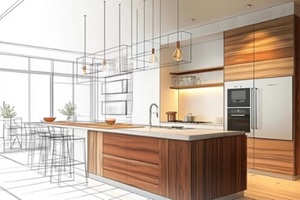
modern kitchen island remodel in MD home

In recent years, islands have become essential focal points of the modern multi-functional kitchen remodel. This is partly due to the rise of remote and hybrid workers, who use open-concept kitchen spaces for work, entertainment, and more.

Regardless of the cause, purposeful kitchen islands have become extremely desirable and now serve multiple functions incorporating seating, sinks, storage, workspaces, and even appliances. Depending on the available space, a kitchen island can become a social and functional extension of the kitchen to enhance the flow of the entire open-concept area.

In this article, we break down three key considerations for designing a multi-functional kitchen island for a modern kitchen space. Homeowners should not rely on one-size-fits-all kitchen island designs. Making a purposeful addition to your open-concept space requires the right layout, design elements, and professional guidance.

1. Size Selection

The size of the kitchen island impacts the look and functionality of the entire kitchen. If it’s too big, the kitchen can become cramped, blocking full access to appliances and storage. Yet, an island can be short-changed on size, limiting its usefulness.

A good rule of thumb used by kitchen designers is to make sure that kitchen islands have at least four feet of floor space around each side. This should quickly identify the right size, providing enough room for cabinets and appliances to be used comfortably.

When following this rule, an island can become too small to be useful. If it has to be 3-4 feet in length or less than 3 feet wide to fit comfortably, homeowners and designers should consider alternatives to kitchen islands, such as tables. If your kitchen is suited for an island, don’t despair; a kitchen remodeling company will be able to provide other exciting design ideas to match your space and goals.

2. Maximizing Storage

Kitchens of all sizes should be designed to maximize storage without sacrificing key functionality. Therefore, the new island should be optimized for storage utility depending on the available space in your kitchen.

For example, extra amenities like a mini fridge, rinse sink, or breakfast bar can be enticing, but they also take up space that could be reserved for storage. Despite being less exciting, extra cabinets and drawers, customized to the height of the island, may be a more functional addition to the design, as well as end cap shelving.

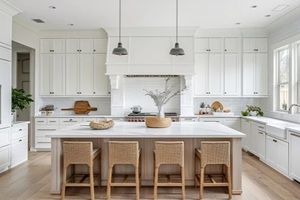
white theme kitchen with island and cabinets

Although a breakfast bar may be a superior priority over storage, it should be reconsidered. The need for alternate eating areas may change over time, but seldom does the need for storage decrease in a kitchen! Expert home designers help homeowners maintain the right priorities when designing their islands.

3. Maintaining the Workflow

In the post-pandemic workplace, demand for remote and hybrid work options is higher than ever. As a result, kitchen islands have become useful additions to the home’s workflow, both in terms of the movement between spaces and the tasks that residents hope to accomplish.

For example, consider the “kitchen work triangle,” a rule often used by professional designers to keep the three key workspaces: the sink, stove, and fridge, between 4 and 9 feet apart. According to the rule, this spacing results in proportions that maximize functionality, allowing the workspaces to function in tandem without overlapping.

In theory, a kitchen island can disrupt this workflow if it blocks easy access to the stove from the fridge, or any other side of the “triangle.” However, islands can also be designed with this workflow in mind to maintain the natural rhythm of the kitchen, such as by incorporating a sink, fridge, or cabinet into the island itself.

When designing multipurpose islands, designers should consider how key points in the workflow interact and how the island can disrupt or encourage a better workspace. Even lighting can factor in. When sufficiently lit, an island can double as a cutting board, cooktop, breakfast bar, table, desk, and more.

When designing a multipurpose kitchen island, professional designers consider both how the island impacts the existing functions and how it can add new ones.

Trust the Experts at Southern Maryland Kitchen & Bath With Your Multifunctional Kitchen Remodel

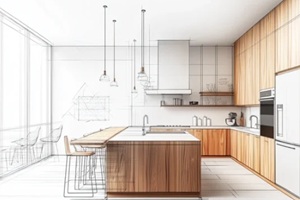
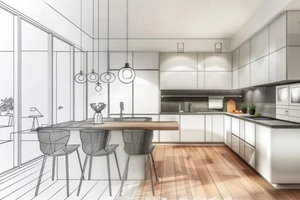
sketch design of modern kitchen

While DIY kitchen designs can work, they often lead homeowners to unnecessary and costly second renovations. The temptation to include a large central island is too much for some homeowners, who don’t recognize the limitations of their floorplans.

At Southern Maryland Kitchen & Bath, our team helps homeowners design ideal kitchens by incorporating their visions without sacrificing functionality. When properly designed, kitchen islands can become multi-purpose focal points of modern kitchens, providing homeowners with a better workflow in their home’s most important and central space.

Contact us today to learn how we can help you focus on functionality when designing a beautiful new kitchen island. We can help you balance your stylistic goals with the basics of good design to execute your ideal kitchen and avoid costly mistakes along the way.

Filed Under: Kitchen

December 9, 2024 by Southern Maryland Kitchen Bath Floors & Design

kitchen remodeling work in progress

We’re going to cut to the chase and say that it is estimated that the average kitchen remodel comes to around $27,000, with most homeowners spending within the range of $12,000 to $60,000 on their new kitchens.

However, this generalized average hardly helps homeowners estimate the cost of a kitchen remodel in their situation since so many factors can affect it. Without a clear understanding of these factors, it becomes impossible to estimate and plan for the cost of a kitchen remodel.

Using this simple guide, homeowners and designers should be better able to estimate the price of their kitchen remodels without being blindsided by unexpected additional costs.

What Can Make Kitchen Remodeling Expensive?

By recognizing which parts of kitchen remodeling are the priciest, homeowners can narrow down the baseline cost for their specific project. Here are the top three costs:

1. Cabinets, for example, remain the highest expenditure for kitchen remodels.

Whether using mass-produced or custom cabinets, these consume nearly a third of the project’s budget on average. If you’re satisfied with your cabinetry, you can cross off the biggest expense from the average cost right away.

2. Labor costs and appliance costs occupy the second third of the average kitchen remodel’s budget.

Labor includes the cost of installing, upgrading, or relocating new fixtures, electrical systems, plumbing lines or access. The costs for on-site inspections can not be overlooked as county or city inspections can be costly in some areas.

3. The last third of the cost of the average kitchen remodel is taken up by everything else, including:

Countertops, floors, lighting, paint, backsplashes, hardware, and faucets. 

While not every remodel will deal with every factor, these are the least expensive aspects of most kitchen remodels. Ironically, they are also the aspects that DIY remodelers often fixate on at the expense of less exciting yet more pressing issues such as electrical and ventilation systems.

Factor in the Remodel Size

Not all kitchen remodels are equal; they are classified by a price point that could be cover a lot of materials in a small or standard-use kitchen, but barely scratch the surface in a large gourmet kitchen. 

newly built kitchen
  • Small remodels are typically classified as those that are priced at or below $22,000. In small remodeling jobs, the cabinets may need to be refaced but not replaced; the paint needs to be redone, or tile floors need to be regrouted not replaced.
  • Medium or mid-scale remodels, up to $46,000, may require appliance replacements or relocation, the addition of a new ventilations system, changing from electric to gas range, or all new systems, cabinets, and fixtures. Mid-scale remodels often involve minor structural changes, painting, and material upgrades. 
  • Large or full kitchen remodels, up to $60,000 and above, require complete overhauls of the space, including new electrical and plumbing work, demolition, new cabinets, floors, and appliances. Full-scale remodels may opt for upgraded high-end flooring and countertop materials as well as premium cabinetry.

Understanding the scope of the remodel helps clarify the cost even before shopping for new appliances and materials, though these numbers are generalized based on averages.

Other Factors to Consider When Remodeling a Kitchen

Factor in the Size

Consider the size of the kitchen when calculating the cost. Based on average remodeling costs, account for $75 per square foot for small remodels and $250 per square foot or more for full remodels. By this logic, and with the other factors included, you can more accurately predict your project costs since even a full remodel of a tiny kitchen likely won’t cost $60,000. 

Factor in the Location

The cost of kitchen remodeling differs by location based on numerous factors, including material costs, sales tax differences, labor costs, and more. Urban areas, and other high-cost living areas are more likely to see higher casts than in rural areas. The scope of the project or shipping costs for materials can be added expenses in either location. 

Additional Factors to Consider

Even small kitchen remodels have quirks and issues many homeowners may miss. For example, permits and inspections may be required to make certain renovations, especially if they involve changes to the square footage or electrical and plumbing systems, or if they require demolition. Building permits and inspections are additional costs that must be considered, though these can differ by location and delay or change your project.

modern kitchen under renovation with white cabinets and a large island

Repairs should also be considered. Once you pull out sinks, dishwashers, or flooring, the findings may surprise you, and not in a good way. Hidden leaks, rotting subfloors, and mold are some of the more common revelations brought about by renovations.

This may require a plumber to identify and correct the issues, costs will be added for new subfloors or drywall replacement, and in worst case scenarios, mold abatement. 

In large-scale remodeling projects, appliances and other household goods may need to be moved and stored until the project is finished, which adds additional labor and storage costs to the project. Since renting a storage unit can cost as much as $300 per month, these additional costs can quickly add up.

Trust the Pros at Southern Maryland Kitchen, Bath, Floors, and Design

Many people think DIY kitchen remodels will save money, but the truth is that even with a clear design and a strict list of priorities, remodels can be messy, costly projects. A professional remodeling company can offer access to luxury brands, experienced tradesmen, permit arrangements, plumbing and electrical expertise, custom design experts, and more to help you refine and execute your vision for your kitchen without costly mistakes.

Contact our team today to learn how Southern Maryland Kitchen & Bath can help you focus on important tasks, customize a consistent stylistic vision, and minimize costs in your professional kitchen remodel.

Filed Under: Kitchen

December 2, 2024 by Southern Maryland Kitchen Bath Floors & Design

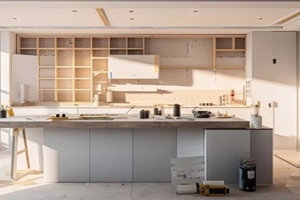
unassembled kitchen cabinets and countertops scattered across the floor, awaiting installation

Despite being fun to think about, without proper planning kitchen remodels can be formidable tasks. Construction, plumbing, and electrical systems are typically considered the ultimate headache for overzealous homeowners; however, as they try to choose the colors, styles, and materials for their ideal kitchen makeover these areas can quickly become overwhelming as well.

That’s why we’re sharing these tips and strategies for what to consider when tackling the daunting task of kitchen remodels. Before you buy, move, or demo anything in your existing kitchen, consider this guide as a way to prioritize and plan the remodel to prevent costly mistakes and achieve your ideal kitchen.

1. Know Your Goals

Professional tradesmen have a saying: “Measure twice, cut once.” It has a literal meaning in construction, but it also applies more broadly to any big project, which is to make mistakes while they’re free. Don’t buy materials or demo your space until you know exactly what you’re trying to achieve.

In the case of kitchens, you should ask yourself specific questions about what you hope to achieve by remodeling. Are you trying to expand the space, add more seating, upgrade the appliances, or improve the lighting? It’s probably a combination of objectives, but you should create mental and physical checklists to help make smart decisions.

It’s easy to get caught up in the fun of kitchen remodeling, going down the rabbit hole of paint swatches and tile patterns. These details can quickly become costly in the absence of a clear understanding of the actual desired outcome.

2. Prioritize the Biggest Project

When remodeling a kitchen, you should make lists of priorities, but you should also create separate plans for your biggest goals in the remodel. If you’re hoping to change the floors, counters, cabinets, fixtures, lighting, appliances, or paint, you should consider each aspect of the job separately before tackling them all at once.

As an example, consider a kitchen remodel that changes the floor plan, possibly to create a more open space. A common mistake among kitchen remodelers is to choose countertop materials, buy appliances, or rework the cabinets before cementing the new floor plan.

An efficient remodeling project only moves forward because the biggest priorities are handled first. Make a list of every aspect of the project, and prioritize them by size. You don’t want to circle back to smaller projects because you did them in the wrong order.

3. Focus on Materials

the contemporary and functional design of a large modern kitchen in Maryland

While it’s more fun to haggle over the details of design, the choice of materials is actually more important to consider than the choice of style in most cases. Color and pattern choices seem like crucial concerns until you make a construction mistake like choosing a laminate, which is notoriously lacking in heat resistance, for a countertop that needs to take a beating.

Take your time researching materials before choosing designs. Glass tile, ceramic tile, stone, laminate, and hardwood each have advantages and disadvantages in different kitchen settings. If considering hardwood floors alongside new cabinets, make sure the materials are complementary and not clashing.

This can start with the basic question of whether the color scheme will be warm or cool. The most important thing is to consider how you want them to function in your new kitchen before picking colors and patterns.

4. Don’t Forget the Lighting

Lighting often gets shoved to the bottom of the priorities list in room remodels, but it should be near the top for kitchens. Kitchens need to be bright and visible, with multiple functional lighting sources. If you opt for tiny pendant lights because they look chic, you could be cheating your new kitchen out of its functionality as well as its flow.

Kitchen lighting should be plentiful without cluttering the space. Your material textures and colors should look good in the light you choose, which often means thinking of kitchen lighting in layers. Be sure to include ambient lights, task lighting, and accent lighting, considering each separately and together to maximize functionality.

Take advantage of any natural light you can to make your new kitchen feel open and airy. Take note of glares on fixtures, focal points for task-oriented lighting, and the best locations for accent lights. You should be thinking about lighting even when choosing appliances, countertop materials, tile patterns, and fixtures. After all, it’s the one room where lighting can truly make or break its entire purpose.

5. Contract Professional Maryland Kitchen Remodel Services

modern kitchen design with beautiful interior

Everyone wants to DIY their kitchen to save money, but the truth is that even with a clear design and a strict list of priorities, remodels can be messy, costly projects. One study of DIY projects found that 63% had regrets about a project (top of the list was flooring), 55% said it took much longer than planned, 50% said it was physically harder than expected, and other high scoring categories including being over budget, poor quality, etc.

A professional remodeling company can offer access to luxury brands, experienced tradesmen, permit arrangements, plumbing and electrical expertise, custom design skills, the right equipment, and more to help you refine and execute your vision for your kitchen without making costly mistakes.

Contact our team today to learn how Southern Maryland Kitchen & Bath can help you focus on important tasks, customize a consistent stylistic vision, and minimize costs in your professional kitchen remodel.

Filed Under: Kitchen

June 10, 2019 by Southern Maryland Kitchen Bath Floors & Design

It’s believed that 52.5% of people in the city of Baltimore alone live in rented homes – and behind each one is a landlord aiming to create a beautiful place that will appeal to tenants. When it comes to designing the kitchen and keeping everything safe, secure and appealing to potential tenants looking around, meanwhile, there are some specific principles to keep in mind.

Safety First

Safety is a key issue in any rented home. The state of Maryland has a number of laws in place designed to protect tenants, such as structural safety and the maintenance of anti-fire facilities – and you’ll need to be sure you adhere to them. Providing a fire extinguisher near cooking equipment is a good move, as well as a fire blanket. And remember: if the home’s boiler is located in the kitchen, it needs to be in an accessible place so that it can be regularly accessed and serviced to check that there are no gas leaks or other problems on the horizon.

Keep It Pretty

When a potential tenant comes to view your residential rental property, it’s likely that the rooms which require the most hygiene – the kitchen and the bathroom – will be most closely scrutinized. After all, considerable amounts of time are spent in both rooms. So by regularly refreshing your kitchen’s decor and by installing a couple of high-end features (such as a mixer sink or an induction hob), your property will stand out from the rest. This may be an upfront cost, but it’s one that’s likely to pay off as it can reduce the amount of time for which your property remains vacant.

Durable And Long-Lasting

Kitchens are expensive, and there are few things worse for a homeowner than having to repair and reinstall them. For that reason, it’s often worth dealing with a high cost upfront and buying a kitchen that is built to last. Given that some tenants are sadly inclined to not look after their rented properties given that their stake in them is usually low, a kitchen made from durable materials is also a good idea.

Designing your rental home well is an important thing for landlords to do, and there’s nothing worse than making a significant design error – especially in an important, well-used but potentially dangerous area like the kitchen. So by prioritizing safety, aesthetics, and durability, you’ll be able to ensure that you don’t cause problems either for you or for your tenant.

Filed Under: Kitchen

September 22, 2017 by Southern Maryland Kitchen Bath Floors & Design

With the holidays approaching, now is the time to plan your kitchen remodel. No other time in the year does our kitchen matter as much as it does than during the Thanksgiving and Christmas Holiday Season. Most (if not all) of your holiday memories are formed as you help prepare your holiday meal or while you are entertaining guests around your newly remodeled kitchen. It takes many weeks of preparation (if not many weeks of work and/or lead time waiting for materials to arrive) to create a kitchen masterpiece.

In my many years in the business, I have found that sometimes people have a general idea of what they want their new kitchen to look like or how they want it to function. Other times, they need someone to walk them through the entire process and they want to make sure that they are making good decisions. Although aesthetics are important, this article is designed to help you and your kitchen designer plan out your new kitchen. Here are some general tips and guidelines as you plan out and measure your kitchen:

1) What Don’t You Like About Your Kitchen?

  • Is that blind corner cabinet a waste of space?
  • Do you wish you had extra seating?
  • Do you wish that the cabinets went all the way to the ceiling?
  • Do you hate how your kitchen is so closed off from the adjacent room?
  • Are there accessories that you wish you had (trash can cabinet, lift gate wall cabinets, appliance garages, etc.)?
  • Do you hate having to bend down to look for your most used pots and pans?
  • Is your refrigerator too close to your range or is your dishwasher too close to the refrigerator?

We all have certain quirks that annoy us about our kitchen and its functionality. When you prepare your next few meals, write down things that you don’t like about how your kitchen functions to make sure that you address them.

2) Where Is Your Existing “Power Spot”?

Everyone has the 5-10 square feet of space where they spend the majority of the time as they prepare their meals. Identify that spot. We are all creatures of habit and moving our “power spot” may be uncomfortable. You may want to plan your kitchen remodel and placement around that spot.

3) Measure Your Existing Layout.

Some companies offer this as a free service but for those of us that are planners and like to have more control with our remodel, measuring your existing layout may help as you plan your next remodel. As you measure your layout, keep in mind that kitchen measurements should be measured accurately ­– by the quarter of an inch. Being off in your measurements could mean that cabinets will not fit or it could throw the placement (sink center under the window, etc.) off. Everyone knows that walls need to be measured (especially the walls that cabinets are getting installed on) but most people forget to measure for doorways and windows (trim to trim). Although most people have 8 or 9 foot ceilings, double check the measurement of your ceiling height, any existing soffits, lighting, or anything else that may be in the way.

If you like this article and would like design help on your kitchen, bathroom, flooring or other home improvement projects, visit our showroom in the Wildewood Shopping Center in California, MD. You can call our showroom at 301-945-8353 and request a FREE (no-obligation) DESIGN CONSULTATION and ESTIMATE with one of our design specialists.

Filed Under: Kitchen

  • « Go to Previous Page
  • Page 1
  • Page 2
  • Page 3

Primary Sidebar

Get In Touch

23415 Three Notch Road #2025
California, MD 20619
(301) 241-0702

Link to company Facebook page

Link to company LinkedIn page

Link to company Instagram page

Link to company Yelp page

Link to company Houzz page

Request Consultation

Company

  • About Us
  • Blog
  • Careers
  • Contact
  • Financing
  • Portfolio
  • Products
  • Reviews

Services

  • Additions
  • Basement Remodeling
  • Bathroom Remodeling
  • Custom Closets & Cabinetry
  • Design Retainer
  • Flooring Services
  • Kitchen Remodeling
  • All Services
Southern Maryland Kitchen, Bath, Floors, & Design logo light

© 2025 Southern Maryland Kitchen Bath Floors & Design|Powered by 321 Web Marketing|Privacy|Accessibility

Synchrony Bank logo
Mastercard logo
VISA logo
American Express logo
Discover logo

Popup Modal: Pain + Trust Approach

Bad Design Wasting Your Time?

Too many options, bad contractors, poor communication — we’ve heard it all. Our professional designers help you visualize your new remodel with a clear plan and confidence. No guesswork, no surprises — just beautiful results, backed by a straightforward process.

"*" indicates required fields

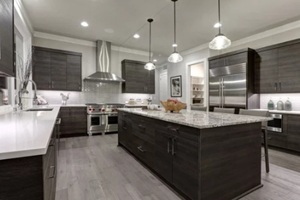
Country house kitchen cabinets with English frames in a dark kitchen decor in a california, maryland home.

Popup Modal: Descriptive Approach (20% Off)

Light. Texture. Space. Everything You Imagined.

Our curated interiors balance form and function — with custom details, premium materials, and timeless craftsmanship tailored to Maryland homes. Enjoy 20% off your personalized design plan as part of our commitment to inspired, luxury living.

"*" indicates required fields

Country house kitchen cabinets with English frames in a dark kitchen decor in a california, maryland home.