

• Skip to primary navigation
  • Skip to main content
  • Skip to primary sidebar

Southern Maryland Kitchen, Bath, Floors & Design

Southern Maryland Kitchen, Bath, Floors, & Design logoSouthern Maryland Kitchen, Bath, Floors, & Design base logo

California, MD Home Remodeling

(301) 241-0702
23415 Three Notch Road #2025, California, MD 20619
Reqest Consultation
  • Services
    • Bathroom Remodeling
    • Basement Remodeling
    • Custom Closets & Cabinetry
    • Design Retainer
    • Kitchen Remodeling
    • Flooring Services
    • Additions
  • Products
    • Bathroom Fixtures
    • Cabinets
    • Carpet
    • Carpet Tile
    • Countertops
    • Glass Tile
    • Hardwood
    • Heated Flooring
    • Laminate
    • Luxury Vinyl
    • Natural Stone
    • Tile
    • Vinyl
    • Waterproof Flooring
  • Financing
    • Kitchen Remodel Financing
    • Bathroom Remodel Financing
  • About Us
    • Blog
    • Careers
    • Contact
    • Portfolio
    • Reviews
  • Request Consultation

Kitchen

September 21, 2026 by Southern Maryland Kitchen Bath Floors & Design

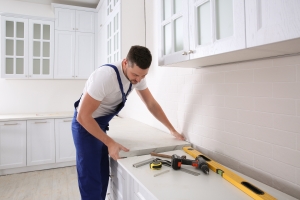
Contractor Installing White Wooden Kitchen Cabinets in Older Home

Remodeling a kitchen in an older home starts with learning what is behind the walls. Older homes still have wiring or plumbing that was installed long before today’s kitchen appliances became common. Looking at those systems early makes the rest of the kitchen remodeling project easier to plan.

This can be true in older farmhouses near Port Tobacco and long-owned homes in Leonardtown. Many older houses have been updated in stages, so each remodel reveals a different mix of old and newer work.

What Makes an Older Home Kitchen Remodel Different

Homeowners notice the layout first. Many older kitchens were designed as smaller rooms separated from the main gathering areas of the house. Updating the kitchen makes the space work better for how people use it today.

How far you can change the layout depends on what’s behind the walls. Working through a few remodel planning questions before construction begins makes it easier to separate the updates you can do yourself from the ones that require a licensed professional.

Older Home Electrical Wiring and Your Remodel

Electrical planning is an important part of remodeling an older kitchen. Some older homes still have wiring that was not built for the number of appliances used in kitchens today. Older wiring often needs to be updated as part of the renovation.

An electrician checks the existing system and determines whether changes are needed for the appliances and outlets planned for the new kitchen. Modern safety features, including outlets designed to quickly shut off power during certain electrical problems, are also required.

Permit and inspection requirements depend on the project and where the home is located. Some remodeling work requires permits or inspections, so check local requirements before construction begins.

What Older Plumbing Means for a Kitchen Renovation

Older kitchens still have plumbing that has been in place for many years. If the home has older water or drain lines, the remodel gives the project team a chance to check their condition while those areas are easier to reach.

Plumbing also needs to move when the kitchen layout changes. Moving a sink or dishwasher affects where water and drain lines need to go.

Some Southern Maryland homes use private wells and septic systems. If your home does, letting the design team know early makes sure those systems are considered as the new kitchen is planned.

Removing a Wall in an Old House Kitchen
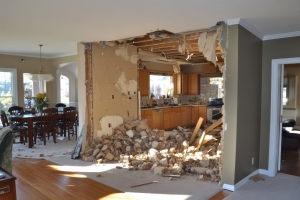
Removing Wall to Open the Kitchen Into Another Room

Opening the kitchen into another room is a common goal in older homes. It can be done once the project team understands whether the wall helps support the house.

If the wall is part of the home’s structure, a professional will need to determine how the space can be safely supported after it is removed. Some older homes need additional support below the new opening.

Bringing in a kitchen designer early helps the layout and construction plan work together. The new support can often be built into or near the ceiling so the finished kitchen still feels like one open space.

Lead Paint and Asbestos in an Older Kitchen

Before demolition begins, check for materials that are more common in older homes. Homes built before 1978 are more likely to contain lead-based paint, so the EPA recommends taking proper precautions before painted surfaces are disturbed.

Contractors working on covered renovations in pre-1978 homes need to be certified and follow lead-safe work practices.

Asbestos is also found in some older flooring materials, including certain vinyl tiles and the backing used on some sheet flooring. Finding these materials before demolition gives the project team time to plan the work safely and avoid unnecessary surprises.

For adult children helping a parent update a long-owned home, checking for these materials early also provides a clearer picture of what the renovation involves.

Planning Cabinets for an Older Kitchen

Today’s kitchens are designed around standard cabinet sizes. Older kitchens have different dimensions or layouts, which makes replacing the cabinets more involved.

Older homes may also have walls and floors that are not perfectly straight or level after years of settling. An experienced installer works around these small differences and makes sure the cabinets fit properly.

Many older kitchen challenges include limited cabinet storage and less counter space than homeowners want today. A thoughtful new layout makes better use of the room that is available.

Where Older Home Remodel Costs Go

In an older home, part of the renovation budget goes toward work that is not visible when the project is finished. Updating older parts of the home adds more work once the remodel begins.

Leaving some room in the budget for unexpected work makes the project easier to manage. An experienced designer helps identify areas that need extra attention before construction begins.

Updating an Old Kitchen to Stay Comfortable at Home
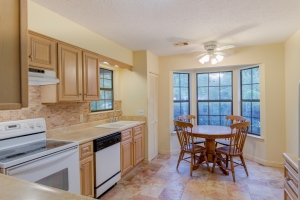
Remodeled Kitchen Style in an Old Home

Many people remodeling an older home plan to stay there for years. Designing the kitchen for comfort as well as appearance makes the space easier to use now and in the future.

Simple design choices make everyday tasks more comfortable. Deep drawers make heavy pots and pans easier to reach without as much bending.

Counter heights can also be planned around the people who use the kitchen. Easy-to-grip handles and comfortable walkways make the room easier to use for everyone in the home.

Start Your Older Home Kitchen Remodel With a Design Consultation

At Southern Maryland Kitchen, Bath, Floors & Design, our family-owned local team helps homeowners plan renovations around the needs of the existing house. Our staff includes Certified Living in Place Professionals, and our all-in-one showroom in California, MD gives you a place to compare materials and ideas in person.

Schedule a consultation with our kitchen and bath design team to start planning your older home kitchen remodel. Bring photos of your current kitchen and a few ideas for what you would like to change. A rough budget range also helps the team shape the project around your goals.

Filed Under: Kitchen, Remodeling

September 7, 2026 by Southern Maryland Kitchen Bath Floors & Design

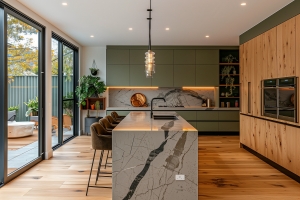
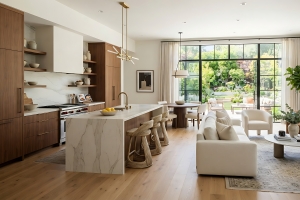
Luxury Open Plan Kitchen and Living Room with Marble Island and Wood Cabinets

An open-concept kitchen works for a growing family when it’s planned around sightlines. You want to watch the play area from the stove and stay part of the room while keeping an eye on what’s cooking.

A lot of Southern Maryland homes still have that older, walled-off kitchen layout. It’s the kind of layout where you lose sight of a toddler around the corner or end up talking to guests through a doorway during a get-together. A kitchen remodel that opens up the layout is one of the more common requests from local families right now. The best-planned ones account for a family that’s still growing, aging, or both.

Design a Layout That Keeps the Family in the Same Room

Open floor plan kitchen ideas begin with the kitchen itself, since most galley and U-shaped layouts were designed for a single cook standing at the counter, facing away from the rest of the room. This setup is one reason they feel disconnected once kids or extended family are part of daily life. A family-friendly kitchen layout swaps that old single-cook setup for one connected gathering zone, an island or peninsula facing the living space.

A wide opening between the kitchen and the next room also means a host doesn’t have to step away from the group to grab a serving dish or check on the oven. That flexibility gets used the most during holidays and cookouts, when a kitchen fills up fast and people end up drifting toward whoever’s cooking anyway. An open kitchen living room layout does the same job on an ordinary weeknight, keeping an eye on homework or a movie from the stove.

Removing a Wall for an Open-Concept Kitchen

An open-concept kitchen renovation starts by figuring out whether the wall between the kitchen and the next room is load-bearing. If it is, a flush beam hidden inside the ceiling may be able to carry that load while keeping the ceiling line clean. It helps the finished room read as one open space.

Permit requirements for taking down a wall vary by jurisdiction. Homeowners in Calvert, Charles, and St. Mary’s County should confirm the specifics with their local building department before demolition starts. This step matters even more for households near Naval Air Station Patuxent River working around a permanent change of station, since a tight moving timeline leaves less room to wait on permitting. 

A Southern Maryland kitchen remodel that opens up the layout moves in the same order. The structure gets confirmed first, since that’s what influences how the rest of the project comes together. Looking through a design portfolio of finished open-concept kitchens is a useful way to see how other homes handled that same transition.

Building One Kitchen for a Toddler and a Grandparent

Family Playing in Modern Open Plan Kitchen and Living Room

A growing number of Southern Maryland households are planning for a parent or in-law to move in, adding a second consideration to the kitchen’s layout. The layout then has to work for a toddler learning to reach a cabinet and for an adult who needs more clearance near the island. Multigenerational kitchen design starts with that kind of walkway planning.

If you’re already thinking ahead to an aging-in-place remodel for the rest of the house, this same layout logic carries over from room to room. Published kitchen planning guidelines call for at least 42 inches of clearance in a single-cook aisle and 48 inches where more than one person works at once, with extra width where two walkways cross. Living in Place principles apply that same thinking to grandparents and visitors using walkers or wheelchairs. Lever-style hardware and clear turning space near the sink and range are common choices, and they blend naturally into a kitchen that still feels warm and pulled together.

Durable Kitchen Materials and Storage Built for Family Life

Quartz counters tend to handle daily family use better than natural stone in a kitchen with kids. Quartz doesn’t need periodic sealing and resists everyday staining, like a splash of tomato sauce, in a way porous granite struggles to match over time. Matte or textured cabinet finishes also commonly hold up better against fingerprints and small scuffs than high-gloss doors.

Kid-friendly kitchen design comes down to storage height. Placing snacks where kids can reach them on their own supports more independence during meal prep. Open-concept kitchen storage ideas that actually get used are the ones designed into custom cabinetry from the start. A few worth planning for early:

  • A pull-out pantry near the entry point keeps snacks and lunch supplies at a kid’s height. That keeps counters clear for whatever’s happening on them.
  • Island seating for kids works well with stools sized to the counter height, 24 to 26 inches for a standard counter-height island. That height lets smaller kids sit down and reach their plates.
  • Closed drawer storage under the island gives toys and homework supplies a home that’s still within arm’s reach during dinner prep.

Bring Your Open-Concept Kitchen Ideas to Life

Worker Installing New Countertop in Modern Open Concept Kitchen

Southern Maryland Kitchen, Bath, Floors & Design works with growing and multigenerational households across Calvert, Charles, and St. Mary’s County on open-concept kitchen projects built around how a family actually spends its time together. A complimentary design consultation is a low-pressure way to find out whether your wall can come down and what a Living in Place-friendly layout would look like for your household.

Filed Under: Kitchen

August 24, 2026 by Southern Maryland Kitchen Bath Floors & Design

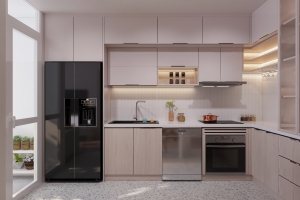
Modern High-End White Cabinet Kitchen with Integrated Fridge and Dishwasher

Kitchen upgrades can increase your enjoyment of your home, but they can also be used as a financial asset to increase home equity. For potential homebuyers, an upgraded kitchen is one of the most attractive additions, and for homeowners, more equity means more financial resources for additional improvements.

​With labor and material prices so high in 2026, high-end kitchen upgrades need to be optimized for the value they add to your home. Whether you plan to sell in the short term or build equity over time, it’s important to know which upgrades add the most value and how to optimize your luxury kitchen remodel for your goals.

What Is the Return on Investment on High-End Kitchen Remodels?

​According to national averages for return on investment (ROI) in kitchen remodels, there’s a significant relationship between the luxury of the remodel and the value it adds to the home. Homeowners planning a high-end remodel need to be aware that, on average, high-end remodels add less value to the home than low-end remodels.

​The reason is that an upscale kitchen remodel costs more, both in real dollar figures and proportional to the ROI it adds. Zillow breaks this down in real terms:

​

Minor RemodelMidrange Major RemodelUpscale Major Remodel
Average Cost$28,458$82,793$164,104
Return$32,141$42,130$58,561
ROI113%51%36%

​
According to the data, minor remodels, on average, return more than the cost of the remodel to the homeowner’s equity, while upscale major remodels return only 36% of the cost. This could be due to ballooning material and labor costs, or the nature of high-end homes to resist value additions because they are already priced at the top of their markets.

​Regardless of the reason, for high-end homeowners planning a luxury kitchen remodel, the conclusion is clear: the value addition needs to be optimized for the remodel to be worth it.

​The Best Features to Remodel to Increase ROI

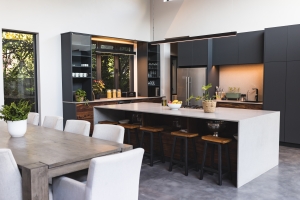
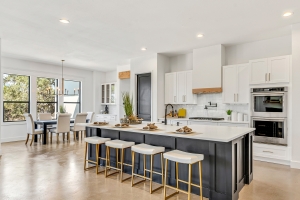
Modern Kitchen with Large Island Bar Stools and Dining Table

According to current data, these are the feature upgrades that yield the highest ROI on high-end kitchen remodels in the current market:

1. Quartzite Countertops

These countertops rarely go out of style. According to Zillow’s 2026 data, home listings that mention quartzite counters can sell for 5.3% more than expected compared with similar homes. This elevated material matches luxury pricing with durability. It gives homes a desirable balance between photographing well while also providing real day-to-day performance.

​Pro Tip: Don’t discount quartz countertops, which came in second in Zillow’s research at 3%, helping homeowners sell their homes for more, potentially at a lower upfront cost.

2. Walk-in Pantries

According to the National Association of Home Builders (NAHB), walk-in pantries are desirable at either an “essential” or “must-have” level by 80% of the buyers surveyed. Additionally, in every version of this survey, walk-in pantries have won or tied for first for the top-rated kitchen feature.

This makes walk-in pantries one of the most valuable high-end additions to your kitchen, provided you have the space to include it in your remodel. The ability to put it on your listing crosses off a checklist item for 8 out of 10 high-end buyers.

Note: Double sinks and drinking water filters ranked close behind in the NAHB survey.

​3. Kitchen Island

Kitchen islands have never stopped being desirable value additions for both homeowners and potential buyers. According to the NAHB, 74% of homebuyers list them as “must-have” or “essential” when looking for a home. One thing to note is that out of 28 kitchen features researched, 21 were rated “desirable” or higher for at least half of buyers. This shows how significant kitchen remodels can be to a buyer’s enthusiasm.

​Pro Tip: Despite their potential utility, kitchen islands do not benefit every kitchen design. A galley-style or other limited-space design may not be able to accommodate an island comfortably, and even in a large kitchen space, an island could interfere with the flow. One of the benefits of designer-led projects compared to contractor-led remodels is that designers are more likely to customize their plans to individual needs, even if that means forgoing a normally desirable feature.

4. Custom Cabinets

As recent data shows, kitchen cabinets are another top priority in terms of value additions in kitchen remodels. For 69% of all remodels, cabinetry is a major part of the upgrade. Even more telling is that only 4% of people who remodel their kitchens do nothing to the cabinets.

​Custom cabinetry adds value by increasing both the style and function of the space. Exterior refinishing and upgraded hardware can improve the look, but the real equity enhancement comes from using the space more efficiently to give buyers more storage and utility. Utensil inlays, custom appliance storage, pull-outs, toe drawers, vertical cabinets, and other options all give buyers a taste of luxury design through cabinets alone.

​Contact Local Kitchen and Bath Designers to Maximize the Value of Your Remodel

Client Choosing Kitchen Cabinet Colors for Remodeling with Designer

At Southern Maryland Kitchen & Bath, our team provides homeowners with a reliable resource for kitchen and bath remodels. We work with in-house designers and suppliers to make sure the process is communicated clearly, budgeted transparently, and executed with your goals in mind. We will work within your budget to plan your high-end kitchen remodel based on your individual home’s possibilities, as well as its limitations.

​Contact our team today for a complimentary design consultation to learn more about high-end kitchen remodels and how to maximize your equity with the right additions.

Filed Under: Kitchen

August 10, 2026 by Southern Maryland Kitchen Bath Floors & Design

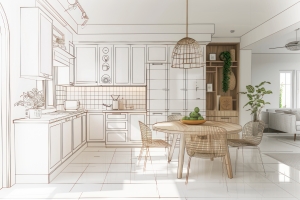
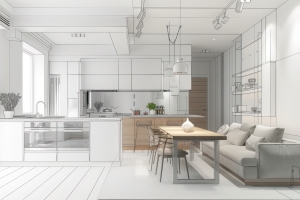
Beautiful Stylish Kitchen Interior Sketch Design and Drawing with Modern Furniture

Contractor-led design comes with many promises, including easier decisions made by professionals and potentially lower upfront budgets. However, these promises cannot always be kept, and as the hidden costs of the remodel begin growing, many homeowners wonder if a designer-led project would have been a better fit for their needs.

Homeowners hoping to avoid kitchen remodel planning mistakes need clear communication from beginning to end, and that requires a well-defined project structure with options as costs change. Remodeling without a designer may seem more affordable at first. However, over relying on general contractors for design services can have a lasting impact on their final project costs.

In This Guide: Learn more about the hidden costs of remodeling without a designer, including:

Inaccurate material allowances Expensive change orders Imprecise layouts
General contractor design services often get the job done, but design builds can provide more planning and transparency from start to finish. The question of a design build vs. a general contractor build is often more significant than homeowners realize.

What Is Contractor-Led Design?

Design work is required in all remodels, regardless of expertise. However, some contractor-led projects can only offer limited design support. In other cases, they may divide design duties among multiple parties. Often, the design plans that homeowners receive during a contractor-led project will meet their expectations on the surface but lack essential details that may not be apparent until later.

These lapses in planning could include:

  • Generic cabinet or fixture plans
  • Disjointed product selections
  • Missing electrical or plumbing decisions
  • Broad budget estimates without contingencies
  • Post-demolition design decisions

Issues can arise when design responsibilities are divided among multiple parties without a clear focus on a unified plan. Outsourcing specialty labor doesn’t guarantee that the remodel will have issues, but it can leave design decisions for later in the project, often after demolition has begun, materials have been purchased, and other aspects have been scheduled.

What Extra Costs Can Contractor-Led Design Cause?

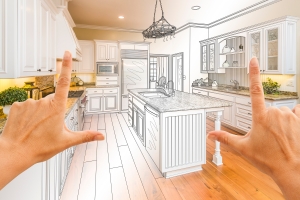
Contractor-Led Kitchen Design with Photo and Sketch Combination

These oversights may result in hidden costs that drive the final budget of contractor-led remodels beyond their initial estimates. These costs include:

1. Inaccurate Material Allowances

Allowances are an industry-standard way to budget for a remodel. General contractors put them in the budget to estimate the final cost of materials for tiling, cabinets, counters, fixtures, lighting, and other hardware. Problems arise when budget changes are delayed until later in the project. For example, if you find a high-end tile that the allowance would not cover, the project cost would increase later.

When material choices are fully planned before the project starts, the costs are more transparent. Across multiple decisions, this can result in a final project cost that is considerably higher than any estimate previously discussed, especially for higher-investment homes. 

Designer Advantage: Designers work with homeowners to frontload decisions about material allowances while the project is still on paper and easy to change. For aspects that could change or may need to be finalized later, designers establish allowances based on the owner’s preferences and expectations before construction begins.

2. Expensive Change Orders

Change orders are common in remodels. However, early design work can prevent unnecessary changes. The question is not whether they occur but when. The general rule is that the later in the project they occur, the more expensive they become since more moving parts need to be changed. For example, if a fixture’s dimensions need to be changed due to a design decision, it’s easier and cheaper to do so before plumbing and electrical work is finalized.

Designer Advantage: Designers plan a space from top to bottom before a hammer touches a nail. This includes appliance placement, clearances, and potential conflicts. They plan the fixtures as well as the plumbing and ventilation needed to accommodate them. Not all change orders can be predicted, but a designer strives to provide specific problem/solution planning before demolition to avoid revisions later.

3. Imprecise Layouts

Imprecise layouts lead to hidden costs throughout the remodel, from planning mistakes during demolition and construction to post-project rework. Some contractors prioritize installation requirements over daily functionality, leading to acceptable designs that fail to meet homeowners’ high expectations. Not all contractors lack this expertise, but where a general contractor often sees necessary repairs, a designer sees real people.

Designer Advantage: Designers consider daily use and the homeowner’s long-term goals when crafting a space. They plan for appliances to be properly spaced for building codes and functionality, but they also take into account how a kitchen would feel with two people cooking or how a bathroom cabinet could interfere with the door in a tight space. Their goal is not only to finish the construction for the present day but also to plan for the home’s future.

Contact a Local Designer to Plan Your Remodel the Right Way

Hands Framing Gradated Custom Kitchen Design Drawing and Photo

Do you need a designer for a kitchen remodel? In many cases, it is the wise choice. At Southern Maryland Kitchen & Bath, our design team works with in-house contractors and material suppliers to provide homeowners with a comprehensive remodeling plan from start to finish. This includes transparent budget allocations, precise design documents, and flexible planning that aligns with your priorities for your remodel. Our goal is to communicate as much of the plan as possible before demolition and construction begin to reduce the amount of rework needed and keep you in the loop about any changes.

Contact our team to learn more about the advantages of designer-led projects and to avoid hidden costs and preventable mistakes in your next remodel.

Filed Under: Kitchen

June 29, 2026 by Southern Maryland Kitchen Bath Floors & Design

In This Article: We break down the reasons why homeowners should hire dedicated designers to plan and execute kitchen remodels in 2026, rather than hiring builders or managing the project themselves.
Designer Showing Kitchen Remodel Blueprint to Homeowner

Imagine finding out that your expensive kitchen remodel is over-budget or behind schedule. Try to put yourself in the future, being told by the workers you hired that they found outdated wiring, faulty plumbing, pest infestations, or another roadblock to finishing your plans on time. If you asked them what you should do now, wouldn’t you hope they could give you a clear answer?

That’s the difference between hiring a designer to handle a kitchen remodeling project vs. a builder. It’s the difference between working with someone who can adapt your designs, adjust material needs, and work with artisans to achieve a vision despite setbacks, and someone who can work from a plan but may not know how to adapt it if something changes.

1. Designers Perform Real-World Assessments

Builders can take measurements and plan remodels, but professionals take the planning stage much further by assessing in detail how the remodel will behave in a real-world setting. In other words, a builder works from a design for a new kitchen, while a professional designer asks who will be using it and how to create a seamless design for each client.

An experienced home chef who plans to entertain will need a different kitchen than a busy remote worker who just needs to access their most-used items quickly, and that will also differ from the kitchen of a busy family. These observations help determine how the kitchen should be laid out, including where appliances and fixtures will be located, and how to use floor and wall space to maximize storage. Designers start remodeling the right way by assessing how the design will flow into the client’s real daily life and what they need for the ideal experience.

2. Designers Optimize Home Value

Interior Designer Talking to Homeowners about Custom Kitchen Design

Remodeled kitchens can add value to a home in more ways than one. Studies show that a remodel can deliver a return on investment (ROI) of up to 113% of its cost. Designers can optimize value by using high-quality materials and personalized craftsmanship, but there’s more to it than that.

Designers are much more likely than builders to be familiar with current design trends, and much more empowered in the remodeling process to make the changes that their experience tells them will add more value to the home. This is especially significant for homeowners remodeling a fixer-upper or planning to sell their home in the next 5 years.

Pro Tip: Studies show that minor kitchen remodels yield a higher ROI on average than major ones due to the difficulty of recouping higher remodeling costs. Experienced designers can help you plan how much (or how little) remodeling you should do to maximize your returns, whether or not that’s your primary goal.

3. Designers Use Their Industry Experience

Designers leverage their experience with contractors, tradesmen, and material suppliers to deliver high-quality remodels within each homeowner’s budget. This industry experience goes beyond what most builders can provide. With designers, in-house teams that are already part of a larger remodeling process work together to customize the remodel based on each client’s needs, local material costs at the time of the project, and other factors such as local labor availability.

Not every “design firm” works this way, and many homeowners assume that by hiring “designers,” they’re getting a better remodel than they would with a team of builders. However, many designers outsource labor, and not all of them have working relationships with local tradesmen that they trust.

Pro Tip: When looking for a design team for your remodel, ask questions about their local and industry experience and partnerships, and search their online profile for information about their workflow.

4. Designers Work With Client Budgets

Designer Created Kitchen Remodel Blueprint According to Client Budget

Builders execute design plans, but they often lack the design-side expertise that helps design teams address budget constraints, project delays, and other changes. Designers work with homeowners to adjust the priorities of their custom kitchen designs and keep the project within their budget. If budget changes are needed, they can help make the adjustments without compromising the result.

For example, many homeowners make a common mistake in their kitchen remodels of continuing with the same materials, counters, or cabinetry, even after a budgetary change. Builders may not know how to adjust, but designers can recommend alternatives, such as semi-custom cabinets, lower-cost materials, or a revised layout to get the project back within the homeowner’s means.

Doing this requires an understanding of how style, functionality, resale, and budgeting interact, deeper than many builders possess. One of the biggest benefits of hiring designers is being able to work with the team from the start of the kitchen remodel to the end, so they always know the expectations and can change the project scope when the budget requires.

Contact a Local Design Team To Plan Your Kitchen Remodel

At Southern Maryland Kitchen & Bath, our team of designers works with in-house contractors, tradesmen, and builders to plan and execute your ideal kitchen remodel. Our goal is to work within your budget, the real-world functionality of your space, and your ideal use case to redesign your kitchen for your exact situation. We value consistent communication to make sure you’re always in the loop of your own project.

Contact our team today to learn how our designers can make your kitchen remodel shine in 2026 and beyond.

Filed Under: Kitchen, Remodeling

May 15, 2026 by Southern Maryland Kitchen Bath Floors & Design

In This Guide: Explore the important questions every homeowner should ask before starting a kitchen remodel, from budget and scope to layout, timeline, and hiring the right contractor.
Modern Kitchen with White and Gray Interior

Kitchen remodels require significant time and money commitments. They disrupt home life, strain the owner’s finances, and frequently overrun time and budget due to interruptions and findings that alter the project’s scope. Homeowners armed with the right questions can plan their kitchen remodels effectively, create a checklist that allows for adaptation to new challenges, and avoid common mistakes that lead to so many delayed, canceled, or reworked projects.

This list of questions can serve as a remodel preparation guide to help homeowners effectively plan their kitchen remodels and renovations. Before you remodel your kitchen, consider these questions as a planning framework to help guide your decision-making and avoid costly mistakes.

Will the Project Be a Renovation or a Remodel?

Remodels and renovations are similar projects, but they are not interchangeable. When planning a renovation, homeowners ask how they can improve the fixtures and designs in their kitchens. For example, renovations can include new countertops, repainted walls, new cabinets, lighting changes, and more. Remodels go much further by changing how the kitchen is structured, laid out, and used, often by relocating appliances, replumbing or rewiring sections, or demolishing and rebuilding the whole room.

Next Step: Before planning a remodel, ask if the project you should be planning is a renovation instead. Renovations are usually cheaper, faster, and easier to plan, and they can be an effective way to refresh a kitchen without dealing with the complexity of a full remodel.

Can We Afford Realistic Budget Contingencies?

Couple Budgeting for Kitchen Remodel with Blueprint

Budgeting for a kitchen remodel is often more complex than it first seems. Most homeowners plan for their appliance upgrades, materials, labor, and other upfront expenses. Still, they may forget about unexpected findings and incidents that can drive up the cost of their project. This is why homeowners often start off budgeting their kitchen remodel with confidence, yet around 78% end up going over their estimates. 

Next Step: Add 10-20% of the initial budget estimate to the final plan to account for unexpected costs, such as finding outdated plumbing or wiring, unexpected permitting issues, material cost increases, and more. Over 2 in 5 kitchen remodels experience significant project delays, so homeowners need to prepare for the unexpected, both emotionally and financially.

Will the Renovation Be Valuable?

While most homeowners consider the value of their kitchen remodel in terms of their tastes and quality of life, they may not consider the ROI or “return on investment” of the project to their home’s potential resale value. Even for homeowners who plan to stay in the home for years, asking honest questions about the remodel’s ROI can help guide decision-making. This can impact the scope of the project you plan to undertake, since smaller remodels tend to have a greater impact on resale value relative to the investment.

Remodeling Tip: According to Zillow, an upscale kitchen remodel has a resale ROI of 36%, meaning that if it costs $100,000 to complete, the financial return will be around $36,000. Comparatively, minor remodels have an ROI of 113%, meaning they gain value compared to the cost. If ROI is a core goal of your remodel, consider how smaller remodels can have a greater impact on returns.

Can the Layout Be Optimized?

Refined Kitchen Layout After Remodeling

Effective remodels take advantage of available space to refine the kitchen layout, and major remodels can even add space by removing walls or islands, or by rearranging counters and cabinetry. Many homeowners begin remodeling to expand their kitchen to accommodate a growing family or changing tastes. Prioritizing an optimized layout over a stylistic change can help maximize the value of your remodel to your family’s daily routine.

Pro Tip: The kitchen triangle is an old design standard, but it remains a good gauge of how a kitchen design functions and how to improve it. The triangle’s points are the sink, stove, and refrigerator, and the distances between them define the workflow. Speak with your design team about rearranging the triangle to meet your changing needs, and consider incorporating an appliance relocation into your remodel to create a more dynamic space.

Partner With Local Kitchen Designers to Start Your Kitchen Remodel

At Southern Maryland Kitchen & Bath, our design team works with in-house contractors and tradesmen to provide homeowners with customized plans for their kitchen remodels. Asking the right questions can make planning easier, and experienced designers help budget-conscious homeowners and realtors address their concerns and improve their homes for resale, reorganization, or a better quality of life.

Contact our team today to schedule a consultation and learn more about what to consider before your kitchen remodel, how to create an effective planning checklist, and how to budget for every possibility.

Filed Under: Kitchen, Remodeling

  • Page 1
  • Page 2
  • Page 3
  • Interim pages omitted …
  • Page 5
  • Go to Next Page »

Primary Sidebar

Get In Touch

23415 Three Notch Road #2025
California, MD 20619
(301) 241-0702

Link to company Facebook page

Link to company LinkedIn page

Link to company Instagram page

Link to company Yelp page

Link to company Houzz page

Request Consultation

Company

  • About Us
  • Blog
  • Careers
  • Contact
  • Financing
  • Portfolio
  • Products
  • Reviews

Services

  • Additions
  • Basement Remodeling
  • Bathroom Remodeling
  • Custom Closets & Cabinetry
  • Design Retainer
  • Flooring Services
  • Kitchen Remodeling
  • All Services
Southern Maryland Kitchen, Bath, Floors, & Design logo light

© 2026 Southern Maryland Kitchen Bath Floors & Design|Powered by 321 Web Marketing|Privacy|Accessibility

Synchrony Bank logo
Mastercard logo
VISA logo
American Express logo
Discover logo