
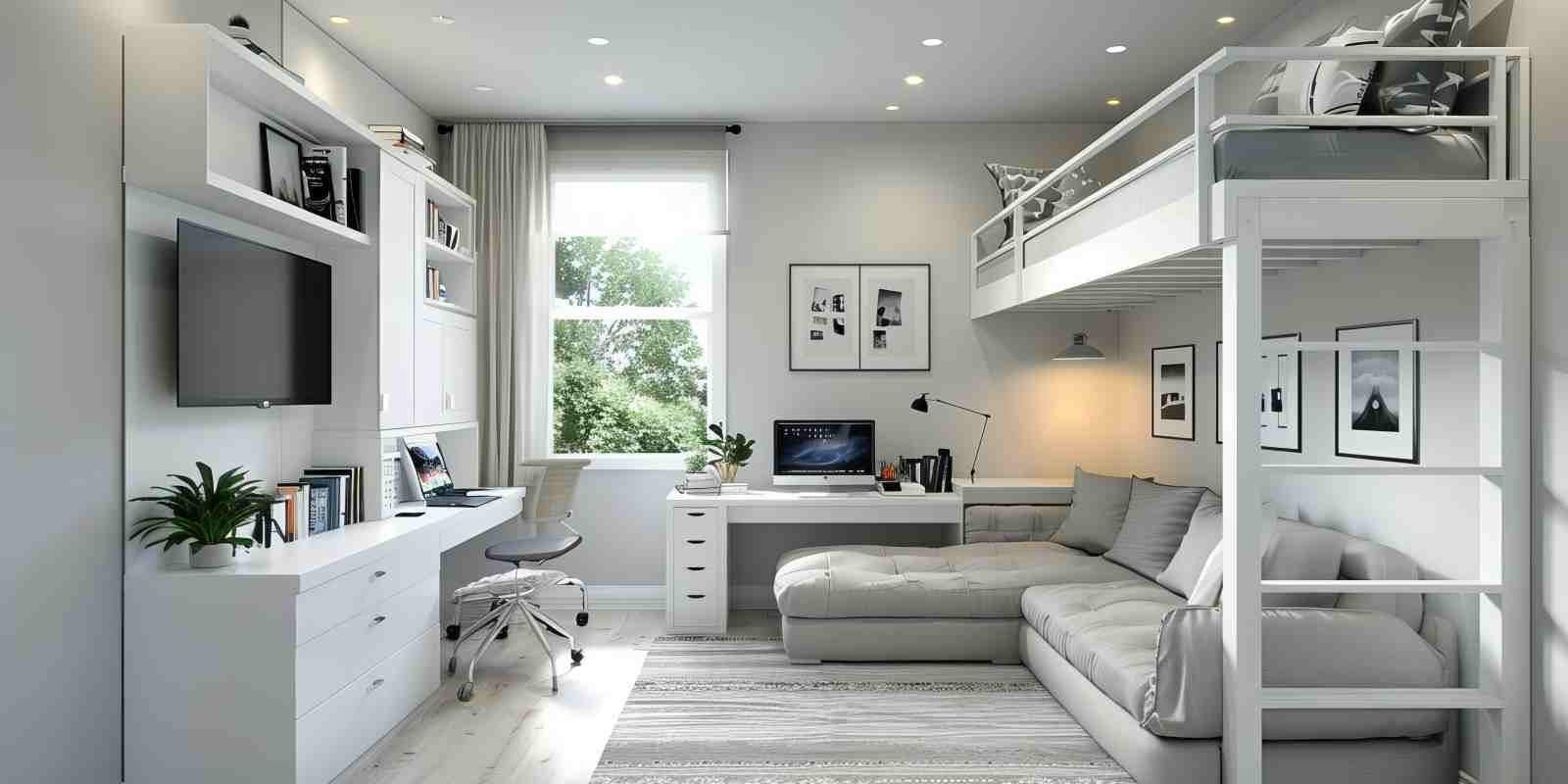
Additions and renovations can serve multiple functions in modern homes, especially with so many people now working partly or entirely from home. According to recent studies, hybrid work models now account for over half of all workers in remote-capable jobs, with 26% working exclusively remote. Effective layouts account for the many ways modern homeowners use their rooms and adapt their homes to their vision for a stylish new design.
In This Blog:
This article covers methods for creating the best layouts for multi-purpose home additions, including a practical process that homeowners can use to determine their space needs and bring their vision to life.
Why Does the Home Addition Need to Be Multi-Purpose?
This is the first question that homeowners and designers should ask about their home addition. “Multi-purpose” can mean a variety of things. By recognizing the exact needs of the space, the design can be customized to work within the space’s limitations and achieve the owner’s vision for its purpose. Here are some examples of how this can be used in the design phase:
Design Example 1: Dual-purpose additions can set clear expectations for two different modes of use within the same space. This is useful in homes with limited space but with a clear vision for how spaces should be used. For example, a living room may be set up for both living and entertaining guests, or a kitchen may be functional for everyday use while easily transforming into a social and work space.
Design Example 2: Hidden and creative storage solutions can create multi-purpose spaces even in limited rooms. Storage can be integrated into built-in banquette or bench seating, kitchen islands, cabinets, and more. For offices, kitchens, craft rooms, playrooms, and more, designated yet hidden storage can improve the flow of the whole space.
Design Example 3: Find multi-purpose spaces using vertical designs to avoid disorganization. Shelves, vertical cabinets, and other mounted storage pieces, such as drying racks, can clear clutter from counters, shelves, or tables and utilize the walls as extra space.
Essential Takeaway
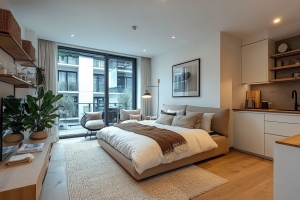
Multi-purpose spaces create opportunities for functionality without cluttering the room. A home addition designed for multiple functions should be planned with both in mind, which is why communicating your vision to an experienced designer and contractor is so essential.
The Layouts That Make Multi-Purpose Rooms Possible
Once the intended functionality has been worked out, owners, designers, and craftsmen need to settle on the layout that will best achieve it. This can be challenging since every space is different. Only an in-person assessment and plan from an experienced designer can create the ideal arrangement for each home. However, these ideas can serve as a starting point:
Versatile Kitchens for Modern Homes
People are working from their homes and cooking more as well. The kitchen, already the heart and soul of any home, has never been busier or in higher demand. The goal for multi-purpose kitchens is to identify the layout that best fits the space.
For example, if there’s room for an island, it can serve as a touchpoint for other functions, such as a makeshift workspace or a built-in for appliances. Just as importantly, kitchens that don’t have room for an island should not force the issue to satisfy a trend. The form should align with the intended functions and be coordinated with the space’s limitations rather than working against them.
Modular Family Gathering Spaces
Family spaces are designed with quality family time in mind, but their flow often accommodates other uses. For example, kids may want to do homework in the living or kitchen spaces, suggesting seating and storage designs that can more easily transition to work. In open-floor plans, bar seating often provides a useful middle ground between socializing and working.
The goal of modern layouts in many cases is to break down the barriers between “living” and “non-living” spaces. Since families and workers want to enjoy their homes, restricted layouts often fail to meet their needs. Achieving this modularity requires thinking about design and furniture in new ways. With hidden storage compartments, a breakfast nook can double as a workspace. Built-ins can transform wall space into multi-functional storage space, or kitchen islands into appliance workstations.
Essential Takeaway
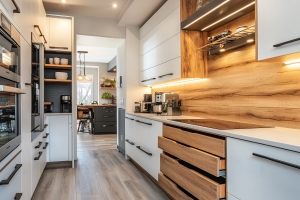
A kitchen layout can no longer be just for “cooking,” and a living room layout can no longer be just for “entertaining.” People are using their homes more, and they need to expand their usable space with multi-functional home additions. Regardless of how much additional square footage they gain, practical additions are planned in the context of modern, multifunctional homes and the expectations of those who own and use them.
Southern Maryland Kitchen & Bath Delivers Multi-Purpose Home Additions Customized to Your Vision
At Southern Maryland Kitchen & Bath, our goal is to customize home additions to the purposes owners have in mind. As Certified Living in Place Professionals, our designers, in-house installers, and tradesmen provide a one-stop shop for home additions and redesigns, from stylish kitchens and living spaces to ADA-certified bathroom designs.
Contact our team today to schedule a consultation and learn how your home additions can become exceptional, multi-functional spaces for any purpose you need.